
Introduction
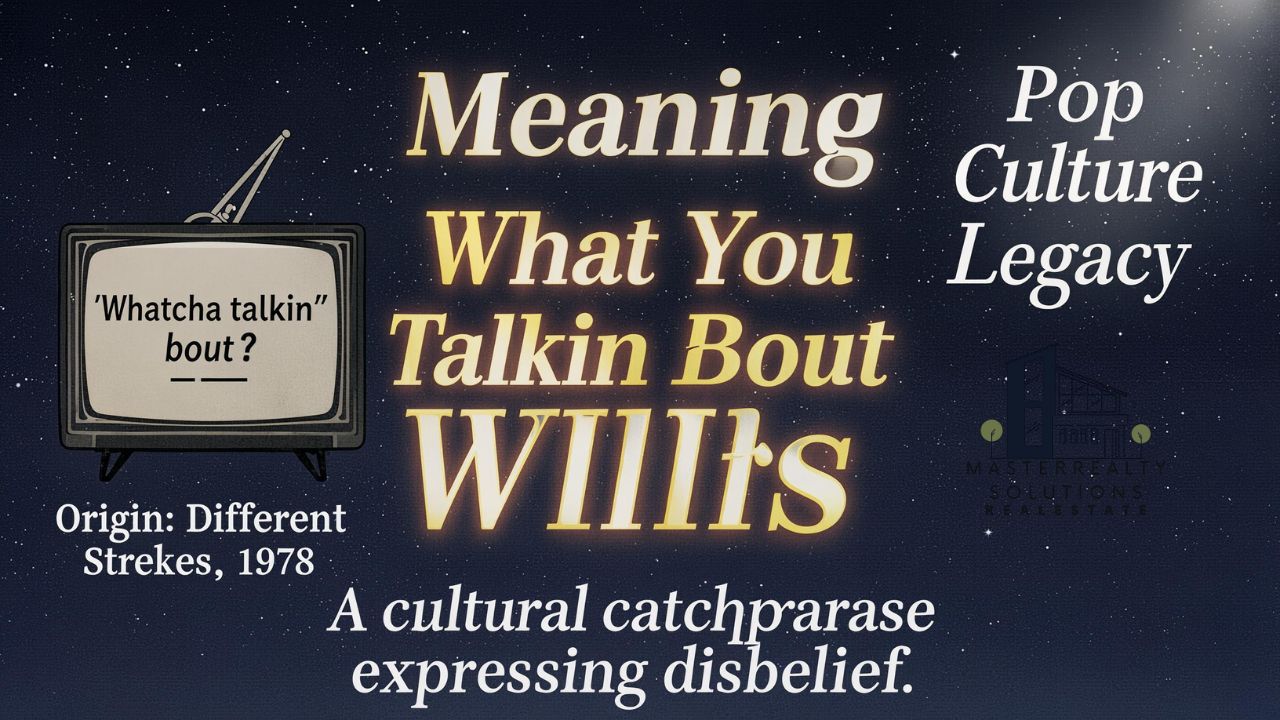
Some phrases become so iconic that decades later people still quote them without even thinking about where they came from. One of those unforgettable lines is what you talkin bout willis, a playful yet powerful expression that shaped television culture and comedy for generations.
If you grew up watching classic sitcoms—or even if you didn’t—you’ve probably heard someone say “what you talkin bout willis” in disbelief, confusion, or humor. The phrase first appeared in the late 1970s television show Diff’rent Strokes, yet today it continues to live on through memes, pop culture references, and everyday conversations.
Understanding the meaning and history behind this famous line reveals more than just a funny quote. It tells a story about television history, cultural influence, and the power of memorable characters to shape language itself.

- The Origin of What You Talkin Bout Willis
- Meaning Behind the Famous Catchphrase
- Diff’rent Strokes and Its Cultural Impact
- Gary Coleman: The Actor Behind Arnold Jackson
- Personal Background and Career Journey
- Net Worth and Financial Insights
- How the Phrase Became a Pop Culture Phenomenon
- Modern Usage in Memes and Internet Culture
- Infographic: Why TV Catchphrases Become Famous
- Legacy in Television and Comedy
- Frequently Asked Questions
- Conclusion
The phrase “what you talkin bout willis” comes from the popular American sitcom Diff’rent Strokes, which aired from 1978 to 1986.
In the show, Arnold Jackson—played by child actor Gary Coleman—often said the line to his older brother Willis Jackson when something confusing or suspicious happened.
Arnold Jackson’s expression of disbelief became a comedic signature. Whenever Willis said something surprising, Arnold would respond with his famous line while raising an eyebrow and tilting his head.
This reaction created one of the most recognizable comedic moments in television history.
Several elements made the phrase unforgettable:
- Gary Coleman’s unique delivery
- The comedic timing in each episode
- The relatable feeling of confusion or disbelief
- The catchy rhythm of the phrase
Because of these factors, audiences quickly adopted the expression.
At its core, the phrase expresses disbelief or confusion.
“What you talkin bout willis” means:
- “What are you talking about?”
- “I don’t understand what you mean.”
- “That sounds strange or unbelievable.”
The phrase is often used humorously rather than seriously.
People use this expression in many casual conversations:
- When hearing an unbelievable story
- When someone says something confusing
- When joking with friends
For example, imagine a friend claiming they ran ten miles before breakfast. Someone might jokingly reply, “What you talkin bout willis?”
The success of the phrase cannot be separated from the success of the sitcom itself.
Diff’rent Strokes was one of the most popular family sitcoms of the late 1970s and early 1980s.
The show followed two African-American brothers, Arnold and Willis Jackson, who were adopted by a wealthy businessman named Philip Drummond.
The storyline explored themes such as:
- Family relationships
- Social class differences
- Childhood challenges
- Humor in everyday life
Despite its comedic tone, the show occasionally addressed serious topics like bullying and discrimination.
During its early seasons, Diff’rent Strokes ranked among the top television programs in the United States.
Millions of viewers tuned in every week, making Arnold Jackson one of the most recognizable child characters on television.
The success of the phrase is closely tied to Gary Coleman, the actor who delivered it so perfectly.
Gary Coleman was born on February 8, 1968, in Zion, Illinois.
He began acting at a young age and quickly gained attention because of his charisma and comedic timing.
His role as Arnold Jackson made him a television superstar almost overnight.
Viewers loved his expressive face, quick wit, and unforgettable catchphrase.
Gary Coleman’s life story is both inspiring and complex.
By the age of 10, Coleman was already one of the highest-paid child actors in television.
His work on Diff’rent Strokes earned him fame around the world.
Coleman suffered from a kidney disease known as congenital nephritis.
This condition affected his growth and required multiple medical treatments throughout his life.
Despite these challenges, he continued acting and appearing in television shows and movies.
His achievements include:
- Starring in one of the most successful sitcoms of the era
- Becoming a household name in the 1980s
- Influencing television comedy and pop culture
At the peak of his career, Gary Coleman earned millions from television contracts and appearances.

However, financial difficulties later affected his wealth.
| Financial Aspect | Details |
|---|---|
| Estimated peak earnings | Millions during sitcom years |
| Major income source | Television acting |
| Financial struggles | Legal disputes and expenses |
| Estimated net worth later in life | Around $75,000 at the time of his death |
His financial journey highlights the challenges many child actors face after early success.
Television catchphrases often fade away after a show ends. However, what you talkin bout willis continued to grow in popularity.
The phrase has appeared in:
- Movies
- Comedy sketches
- Television parodies
- Advertising campaigns
These references helped keep the catchphrase alive.
Many comedians and celebrities have quoted the line in interviews and performances.
The phrase became shorthand for playful disbelief.
The internet introduced the phrase to a new generation.
Memes featuring Arnold Jackson’s expression often include humorous captions that reflect confusion or sarcasm.
For example:
- Someone seeing a shocking news headline
- A friend telling an unbelievable story
- A funny reaction image in group chats
Short, memorable expressions work perfectly on social media.
“What you talkin bout willis” fits this format because it is:
- Easy to recognize
- Emotionally expressive
- Funny and relatable
| Factor | Explanation |
|---|---|
| Character personality | Memorable characters deliver the line |
| Repetition | The phrase appears in multiple episodes |
| Humor | Funny delivery increases recall |
| Cultural timing | The show airs during peak popularity |
| Audience relatability | Viewers connect with the emotion |
Catchphrases that combine these elements often become cultural icons.
The influence of what you talkin bout willis extends far beyond the original sitcom.
Many sitcoms adopted similar catchphrase strategies.
Examples include:
- “How you doin’?” – Friends
- “Did I do that?” – Family Matters
- “Bazinga!” – The Big Bang Theory
Catchphrases help audiences instantly recognize characters.
Classic sitcoms continue to attract viewers through streaming platforms.
As new generations discover older shows, iconic lines remain part of pop culture.
It originated from the sitcom Diff’rent Strokes, spoken by Arnold Jackson to his brother Willis.
The phrase was made famous by actor Gary Coleman, who played Arnold Jackson.
It expresses disbelief, confusion, or playful questioning.
Its humor, repetition on television, and Gary Coleman’s memorable delivery made it iconic.
Yes. It remains popular in memes, jokes, and casual conversation.
The line appeared in the American sitcom Diff’rent Strokes.
The line was written in the show’s script, but Coleman’s performance made it legendary.
They are easy to remember, often repeated, and linked to beloved characters.
Some lines from television disappear after a few years, but others become timeless cultural references. The phrase what you talkin bout willis belongs firmly in that second category.
What began as a comedic reaction from a young sitcom character eventually transformed into a global pop culture expression. Its humor, simplicity, and emotional tone make it instantly recognizable even decades after its first appearance.
Beyond being a funny line, the phrase also represents the golden era of television sitcoms and the unforgettable performance of Gary Coleman. Whether quoted in conversation, referenced in comedy sketches, or turned into internet memes, it continues to remind audiences of how powerful a simple phrase can be when delivered at exactly the right moment.