Choosing the right flooring can completely transform your home—but making the right decision isn’t always simple. When comparing engineered vs solid hardwood, many homeowners feel overwhelmed by the subtle yet important differences.
From durability to pricing and installation, the debate around engineered hardwood vs solid wood flooring continues to grow as both options become increasingly popular. Whether you’re renovating or building from scratch, understanding how these flooring types perform in real-life situations is essential.
In this guide, we’ll break down everything you need to know about engineered wood flooring vs solid hardwood flooring in a simple, natural, and easy-to-understand way—so you can confidently choose what’s right for your home.
Understanding Hardwood Flooring Basics
Before diving deep into solid vs engineered hardwood, it’s important to understand what makes each option unique.
Hardwood flooring has long been a symbol of elegance and durability. But modern innovations have introduced alternatives that compete closely with traditional wood.
What Is Solid Hardwood?
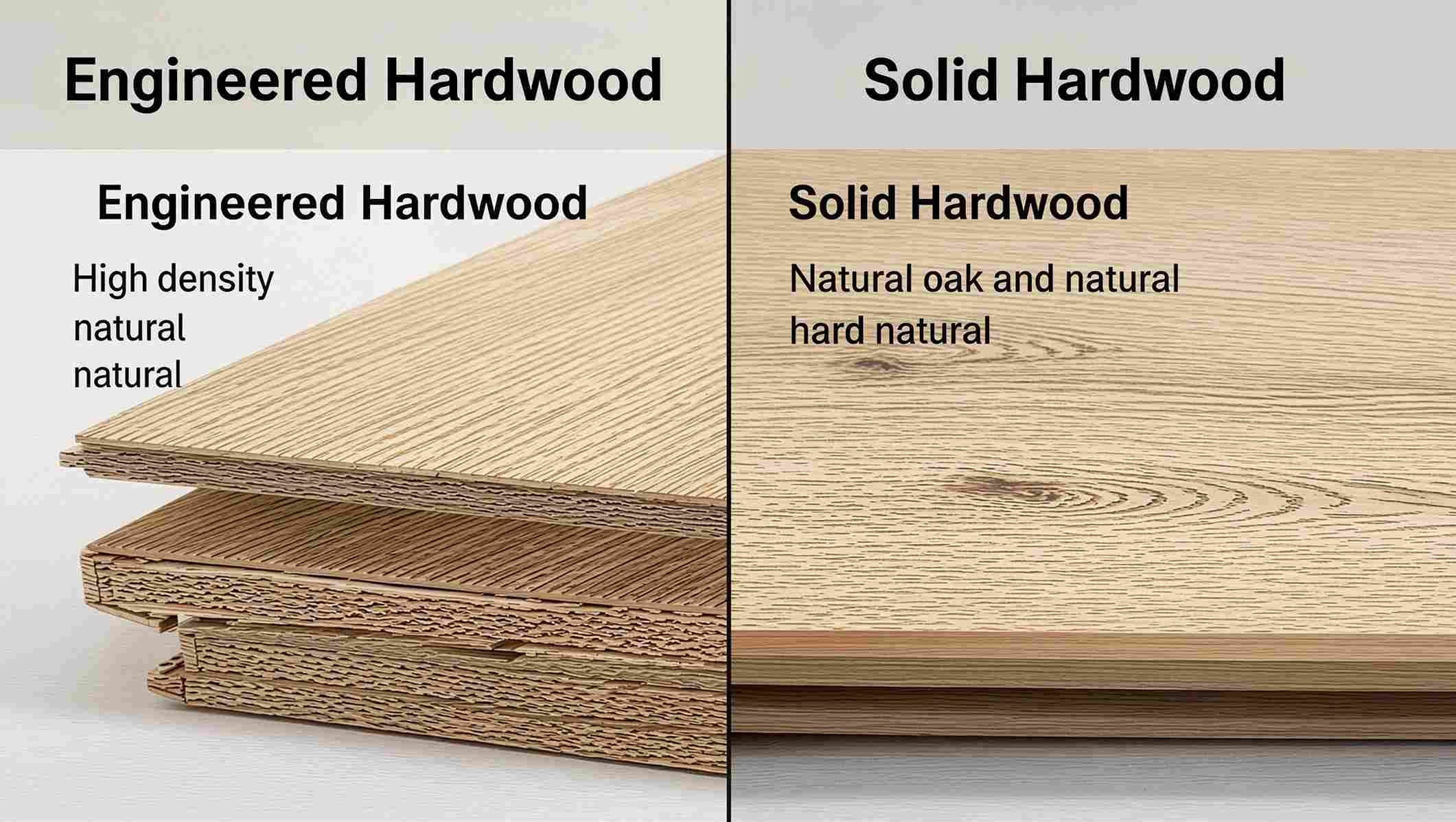
Solid hardwood is made from a single piece of natural wood. This is the traditional option people think of when comparing engineered hardwood vs solid hardwood.
Key features:
- Made from 100% real wood
- Thick and long-lasting
- Can be refinished multiple times
Because of its natural composition, many homeowners prefer solid hardwood vs engineered hardwood for its authenticity and long lifespan.
What Is Engineered Hardwood?
Engineered hardwood consists of multiple layers, with a real hardwood veneer on top and plywood or fiberboard beneath.
When comparing solid hardwood flooring vs engineered, the construction is what makes engineered wood unique.
Key benefits:
- Better resistance to moisture
- More stable in changing climates
- Easier installation options
This makes engineered hardwood flooring vs solid wood a strong competitor in modern homes.
Engineered vs Solid Hardwood: Core Differences
When evaluating solid hardwood flooring vs engineered hardwood flooring, the differences go beyond just structure.
Construction
- Solid wood: One solid plank
- Engineered wood: Multi-layered design
This is the main reason why engineered hardwood vs solid wood performs differently under stress and humidity.
Durability and Lifespan
Solid hardwood is known for lasting decades—often 50+ years. In contrast, engineered vs solid hardwood flooring comparisons show engineered wood typically lasts 20–40 years.
However, modern products have improved significantly, making engineered hardwood flooring vs solid more competitive than ever.
Appearance: Can You Tell the Difference?
One of the biggest myths in the engineered hardwood vs solid debate is that engineered flooring looks artificial.
Visual Appeal
In reality:
- Both use real wood surfaces
- Both come in similar finishes
- Both offer natural grain patterns
This is why many people comparing solid wood vs engineered hardwood struggle to tell them apart.
Aging Over Time
Solid hardwood develops a deeper character over time. Meanwhile, solid wood vs engineered hardwood floors may show less aging depending on the veneer thickness.
Installation Differences
Installation plays a major role when choosing between engineered hardwood floor vs solid wood.
Solid Hardwood Installation
- Requires nailing or stapling
- Needs a wooden subfloor
- Typically installed by professionals
This makes solid hardwood vs engineered hardwood flooring slightly more complex in terms of labor.
Engineered Hardwood Installation
- Can be floated, glued, or nailed
- Works on concrete and various surfaces
- DIY-friendly in many cases
Because of this, many homeowners prefer engineered hardwood vs solid hardwood flooring for convenience.
Moisture Resistance and Stability
Moisture is a key factor when comparing solid hardwood vs engineered flooring options.
Solid Hardwood Challenges
Solid wood reacts to humidity changes, which can lead to:
- Expansion
- Shrinking
- Warping
This is why solid hardwood flooring vs engineered hardwood flooring often favors engineered wood in humid climates.
Engineered Hardwood Advantage
Thanks to its layered structure, engineered hardwood vs solid hardwood performs better in areas with moisture fluctuations.
It’s ideal for:
- Basements
- Kitchens
- Apartments
Cost Comparison
Budget is often the deciding factor in cost of engineered hardwood vs solid hardwood.
Initial Cost
- Solid hardwood: Higher upfront cost
- Engineered hardwood: More affordable options
When comparing cost of solid hardwood vs engineered, engineered flooring usually wins in terms of initial investment.
Long-Term Cost
Solid hardwood may cost more initially, but it lasts longer and can be refinished multiple times.
Meanwhile, engineered hardwood vs solid hardwood cost comparisons show engineered flooring may need replacement sooner.
Maintenance and Care
Maintenance is another important factor in engineered hardwood vs solid hardwood flooring decisions.
Solid Hardwood
- Can be sanded multiple times
- Requires careful moisture control
Engineered Hardwood
- Easier day-to-day maintenance
- Limited refinishing ability
This makes solid hardwood vs engineered hardwood flooring a balance between longevity and convenience.
Best Use Cases for Each Type
Choosing between engineered hardwood vs solid hardwood flooring depends heavily on where you plan to install it.
Best for Solid Hardwood
- Living rooms
- Bedrooms
- Hallways
Stable environments suit solid wood vs engineered hardwood better.
Best for Engineered Hardwood
- Basements
- Kitchens
- Condos
These areas benefit from the flexibility of engineered hardwood flooring vs solid wood.
Environmental Considerations
Sustainability is increasingly important in flooring decisions.
Solid Hardwood
- Uses more raw wood
- Longer lifespan
Engineered Hardwood
- Uses less hardwood overall
- Often incorporates recycled materials
This makes engineered hardwood vs solid wood a more eco-conscious option in some cases.
Pros and Cons
Solid Hardwood Pros
- Extremely durable
- Can be refinished many times
- Classic and authentic
Solid Hardwood Cons
- Expensive
- Sensitive to moisture
Engineered Hardwood Pros
- Moisture-resistant
- Easier installation
- More versatile
Engineered Hardwood Cons
- Shorter lifespan
- Limited refinishing
Frequently Asked Questions
What is the difference between engineered vs solid hardwood?
The main difference is construction—solid hardwood is one piece of wood, while engineered hardwood has multiple layers.
Which is better: engineered hardwood vs solid wood flooring?
It depends on your needs. Engineered is better for moisture-prone areas, while solid hardwood is better for longevity.
Is engineered wood flooring vs solid hardwood flooring more durable?
Solid hardwood lasts longer, but engineered hardwood is more stable in changing conditions.
What is the cost of engineered hardwood vs solid hardwood?
Engineered hardwood is usually cheaper upfront, while solid hardwood is more expensive but lasts longer.
Can engineered hardwood be refinished?
Yes, but only a few times depending on the thickness of the top layer.
Which is better for resale value?
Solid hardwood often adds more value, but both are desirable to buyers.
Is solid hardwood flooring vs engineered hardwood flooring better for basements?
Engineered hardwood is better due to its moisture resistance.
Does engineered hardwood look real?
Yes, because the top layer is real wood.
Conclusion
The choice between engineered vs solid hardwood ultimately depends on your lifestyle, budget, and space. If you want timeless durability and long-term value, solid hardwood is a classic choice. But if you need flexibility, affordability, and moisture resistance, engineered hardwood is a smart modern solution.
Understanding the full picture of engineered hardwood vs solid hardwood, including cost, durability, and installation, helps you make a confident decision. No matter which you choose, both options bring natural beauty and warmth that can elevate any home.